




Debrecen
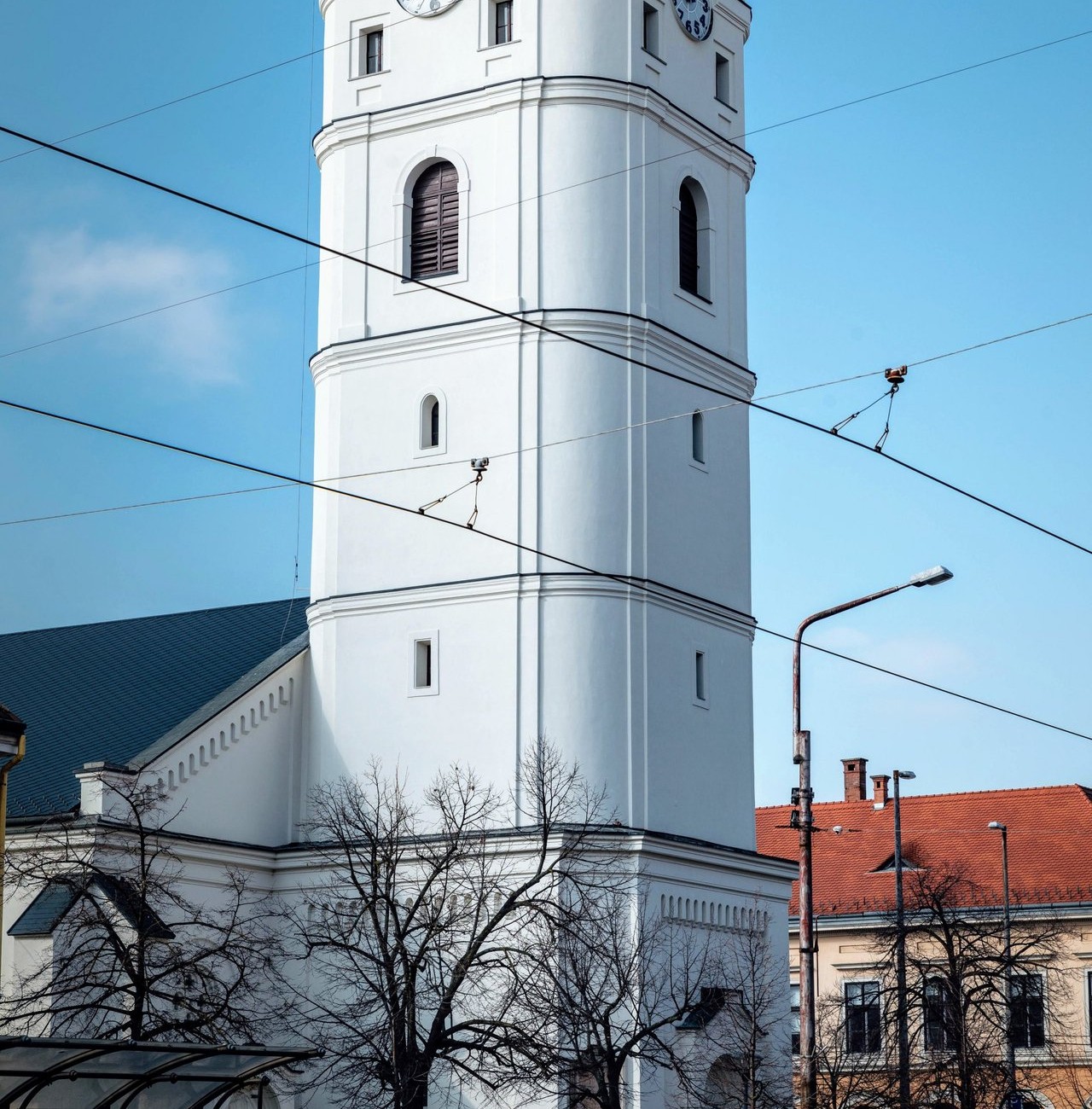
A Debreceni Református Kistemplom – közismert nevén Kistemplom vagy Csonkatemplom – Debrecen szívében, a Piac utca és a Széchenyi utca találkozásánál, a Révész téren áll. Az eredetileg barokk stílusban emelt templom külső arculatát az 1876-os, neoromán szellemű átépítés határozza meg, amely máig meghatározó eleme a városképnek.
A templom helyén a 18. századig egyszerű faépület szolgált istentiszteleti helyként, amelyet kezdetben „szín”-nek neveztek. A később elterjedt „kistemplom” elnevezés arra utalt, hogy a város nagyobb temploma akkor még az András-templom volt. A Rákóczi-szabadságharc idején a bevonuló császári csapatok megszentségtelenítették az épületet, amikor istállóként használták. Az 1719-es tűzvész a fatemplomot teljesen elpusztította.
Az új, immár kőből épült, mintegy 1600 fő befogadására alkalmas templom építését Báthory Szabó András cívis polgár adománya tette lehetővé. 1726-ra toronygombja is a helyére került, ám az 1727-es újabb tűzvész súlyos károkat okozott az épületben. A helyreállítás négy évet vett igénybe.
A templom belső értékei közül kiemelkedik az 1790-ben készült, copf stílusú szószék. Orgonáját Kiszeli István építette, gazdagítva ezzel a gyülekezet zenei szolgálatát.
A torony eredetileg hagyma alakú sisakkal zárult, amelyet 1907-ben egy hatalmas szélvész megrongált. Bár kijavították, az alföldi szelek rövid időn belül ismét súlyosan károsították, végül teljesen elpusztították. Az építészek végül kupola nélküli, bástyaszerű lezárást alakítottak ki. Innen ered a „Csonkatemplom” elnevezés, amely mára szeretetteljes helyi névvé vált. Az épület lebontása többször is felmerült, ám Schulek Frigyes országos hírű építész megőrzését és felújítását javasolta, így a templom fennmaradhatott.
A templom falai között 1860-ban jelentős egyháztörténeti esemény zajlott: itt tartották azt a nagygyűlést, amely a protestáns egyházak önkormányzatát korlátozó császári-királyi rendelet ellen tiltakozott. A hagyomány szerint a császári megbízott a gyűlés betiltását hirdette ki, mire Balogh Péter püspök így válaszolt: „Én pedig az Isten nevében megnyitom!” Az esemény a szabadságharc utáni időszak egyik fontos jelképes pillanatává vált.
The Debrecen Reformed Small Church, commonly known as the Small Church or the Church with the Truncated Tower, stands in the heart of Debrecen, at the intersection of Piac Street and Széchenyi Street, on Révész Square. Originally built in the Baroque style, the church acquired its present appearance during a Neo-Romanesque reconstruction in 1876, which remains a defining feature of the cityscape to this day.
Until the 18th century, a simple wooden building stood on the site of the present church and served as a place of worship. It was initially known as a "shed". The name “Small Church” later came into use because the city’s larger church at the time was St Andrew’s Church. During the Rákóczi War of Independence, the building was desecrated by the imperial troops who occupied it and used it as a stable. The wooden church was completely destroyed in the fire of 1719.
The construction of a new stone church, capable of accommodating approximately 1,600 people, was made possible by a donation from András Báthory Szabó, a citizen of Debrecen. By 1726, the finial had been placed on the tower, but another fire in 1727 caused severe damage to the building. The restoration took four years.
Among the church’s interior features, the pulpit made in 1790 in the Zopf style is particularly noteworthy. Its organ was built by István Kiszeli, further enriching the congregation’s musical service.
The tower was originally topped by an onion-shaped dome, which was damaged by a severe windstorm in 1907. Although it was repaired, the strong winds of the Great Hungarian Plain soon caused further serious damage, eventually destroying the dome completely. The architects ultimately created a fortress-like tower without a dome. This gave rise to the name “Church with the Truncated Tower”, which has since become an affectionate local name for the building. The demolition of the church was considered on several occasions, but the nationally renowned architect Frigyes Schulek recommended that it be preserved and renovated, allowing the church to survive.
A significant event in the history of the Hungarian Reformed Church took place within its walls in 1860. A large assembly was held here to protest against an imperial-royal decree restricting the self-government of Protestant churches. According to tradition, the imperial commissioner announced that the assembly was prohibited, to which Bishop Péter Balogh responded: “And I open it in the name of God!” The event became one of the important symbolic moments of the period following the 1848-1849 Hungarian War of Independence.